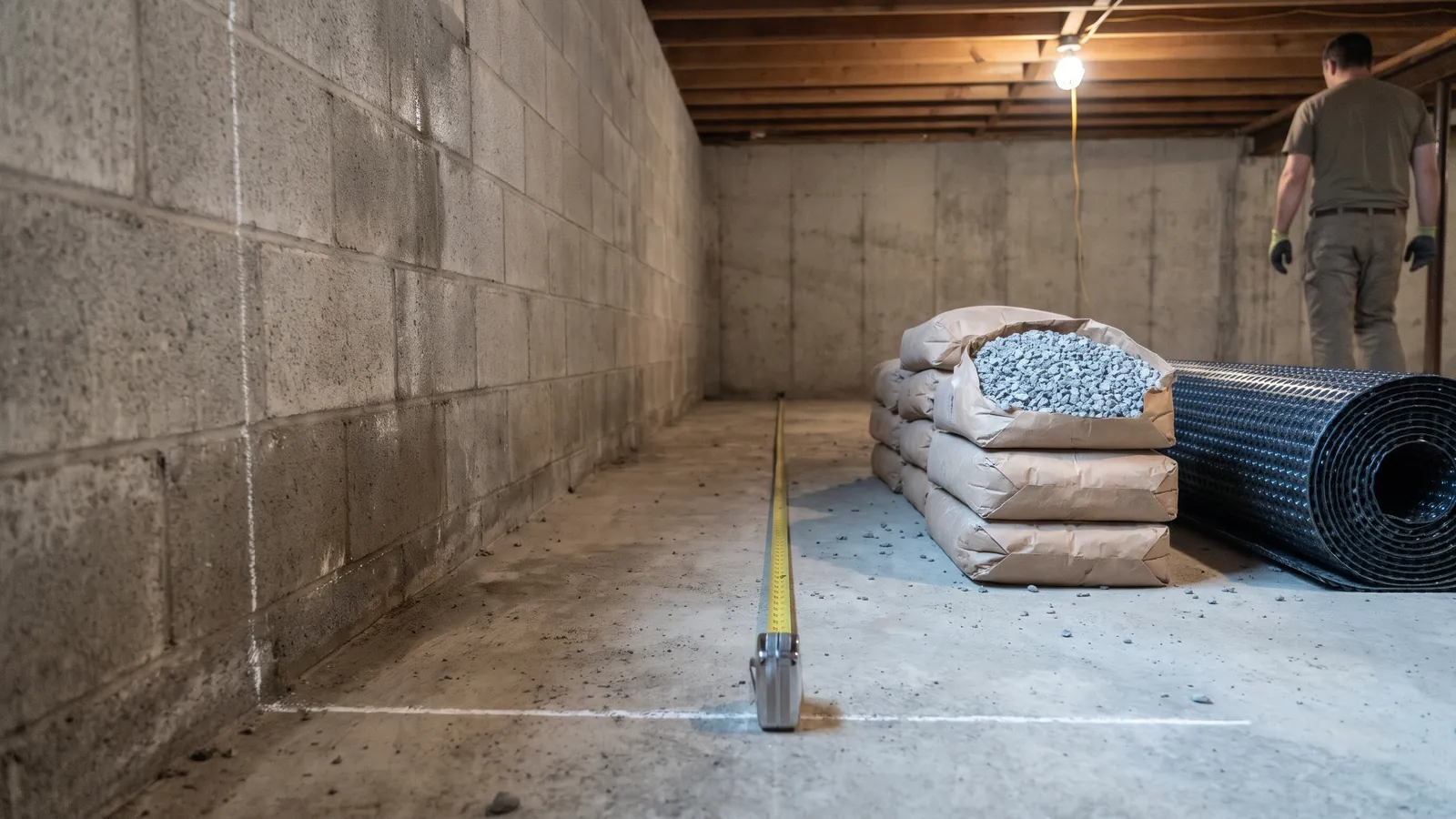
Waterproofing cost in Columbus
Typical ranges for interior drains, exterior excavation and crack injection, and what moves the number.
Read the cost guide →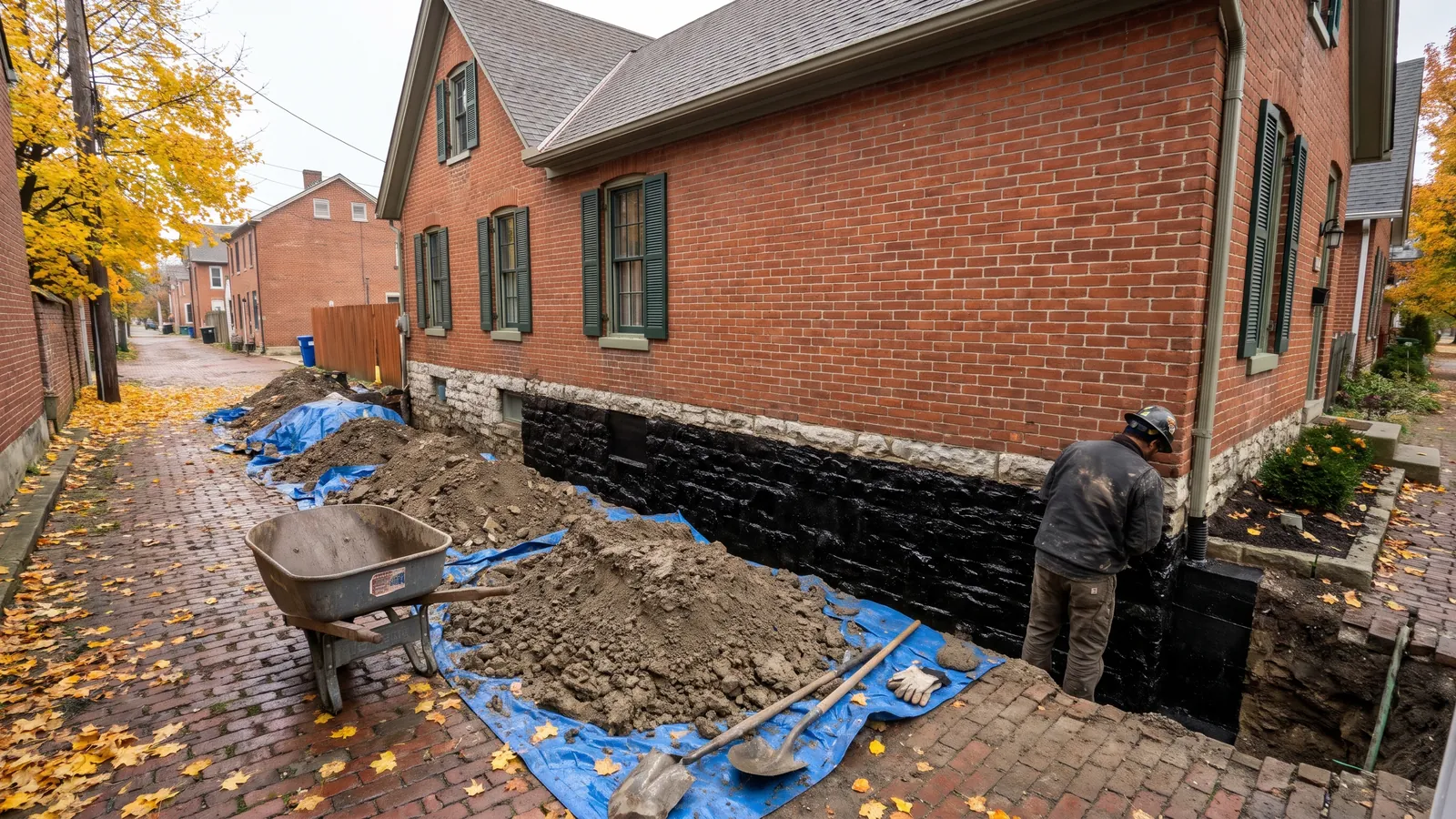
Interior drain systems, exterior excavation, crack injection, sump pumps and crawl space sealing for homes from German Village and Clintonville out to Powell, Pickerington and New Albany.
Our phone line runs every minute of the year. Registered and insured.
Where is the water coming in?
Four fields. We call back the same day to set the inspection.
Every job starts with the same question: where is the water entering, and under how much pressure? The answer decides whether the fix is a drain, a membrane, an injection, a pump or a regrade.
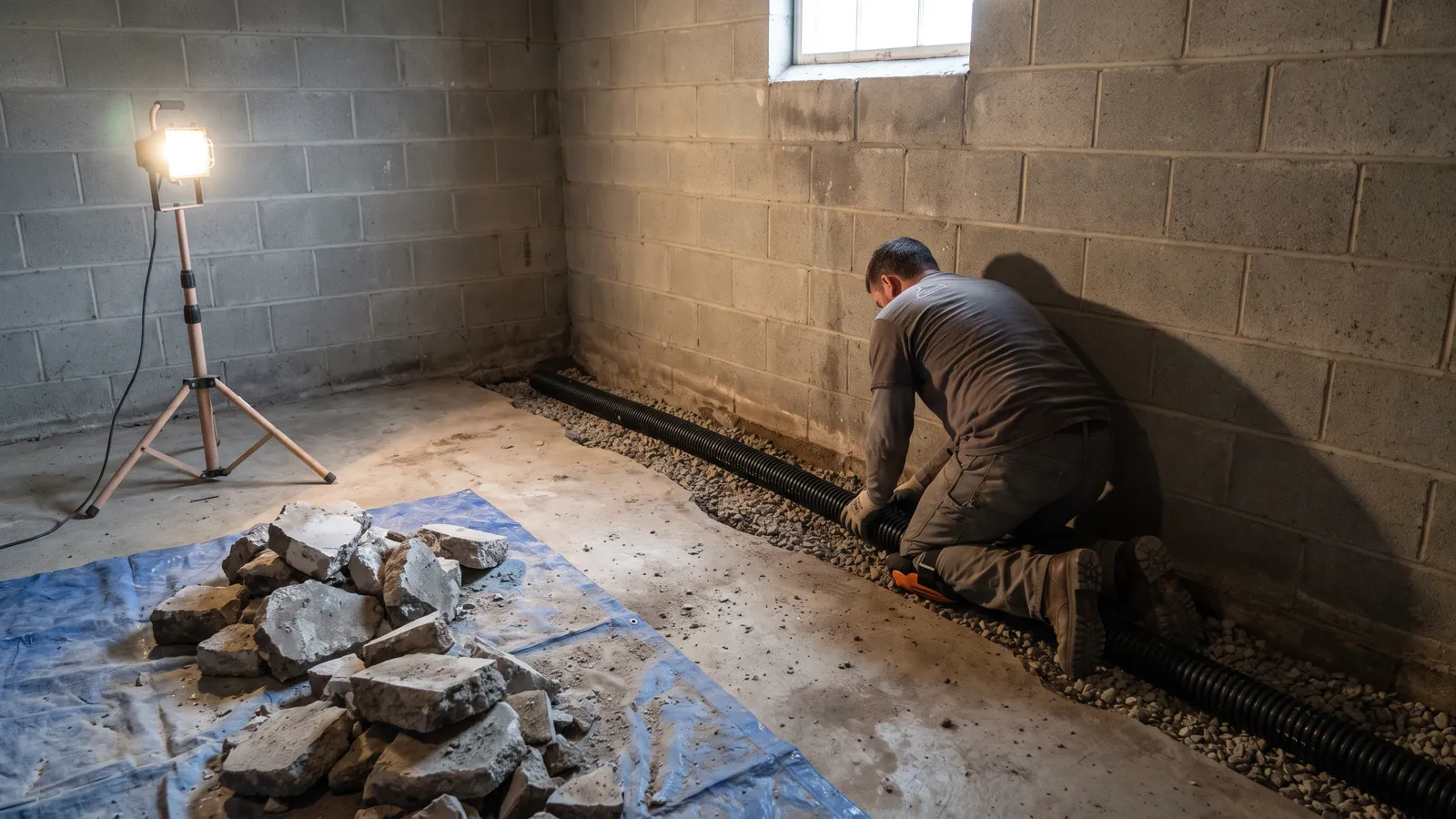
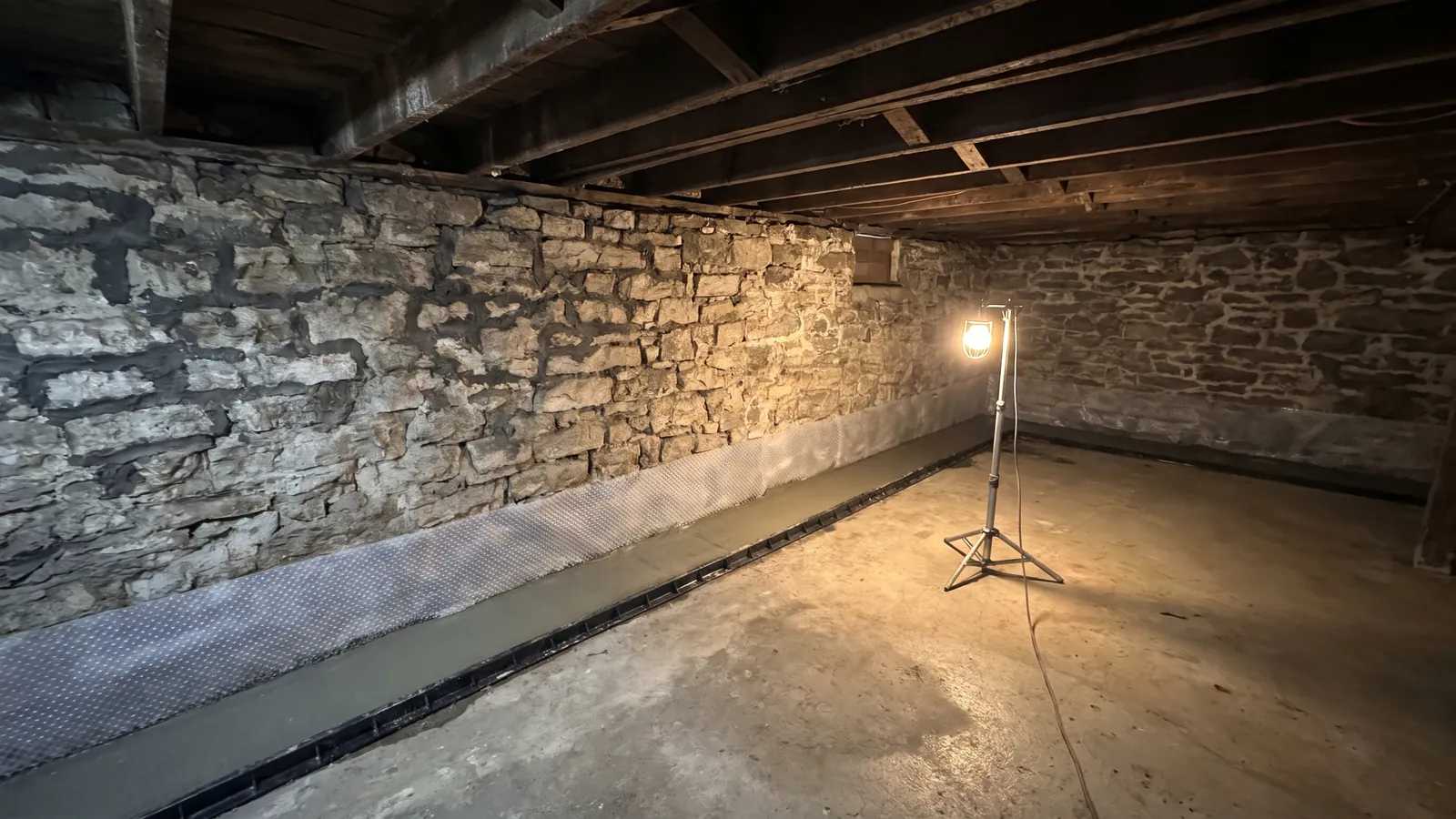
A drain channel cut into the floor along the walls, a membrane on the wall face, and a sump that carries the water out.
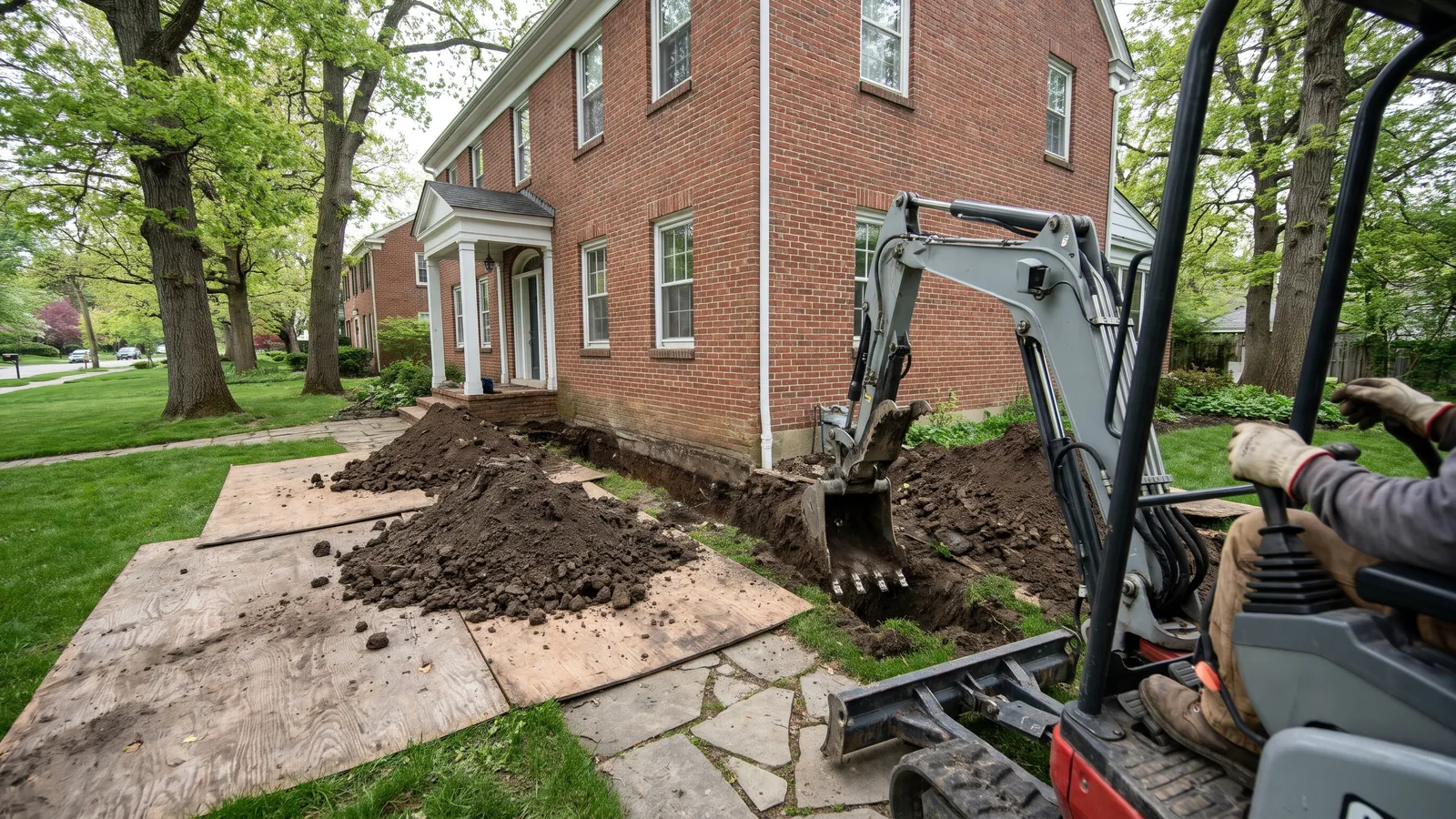
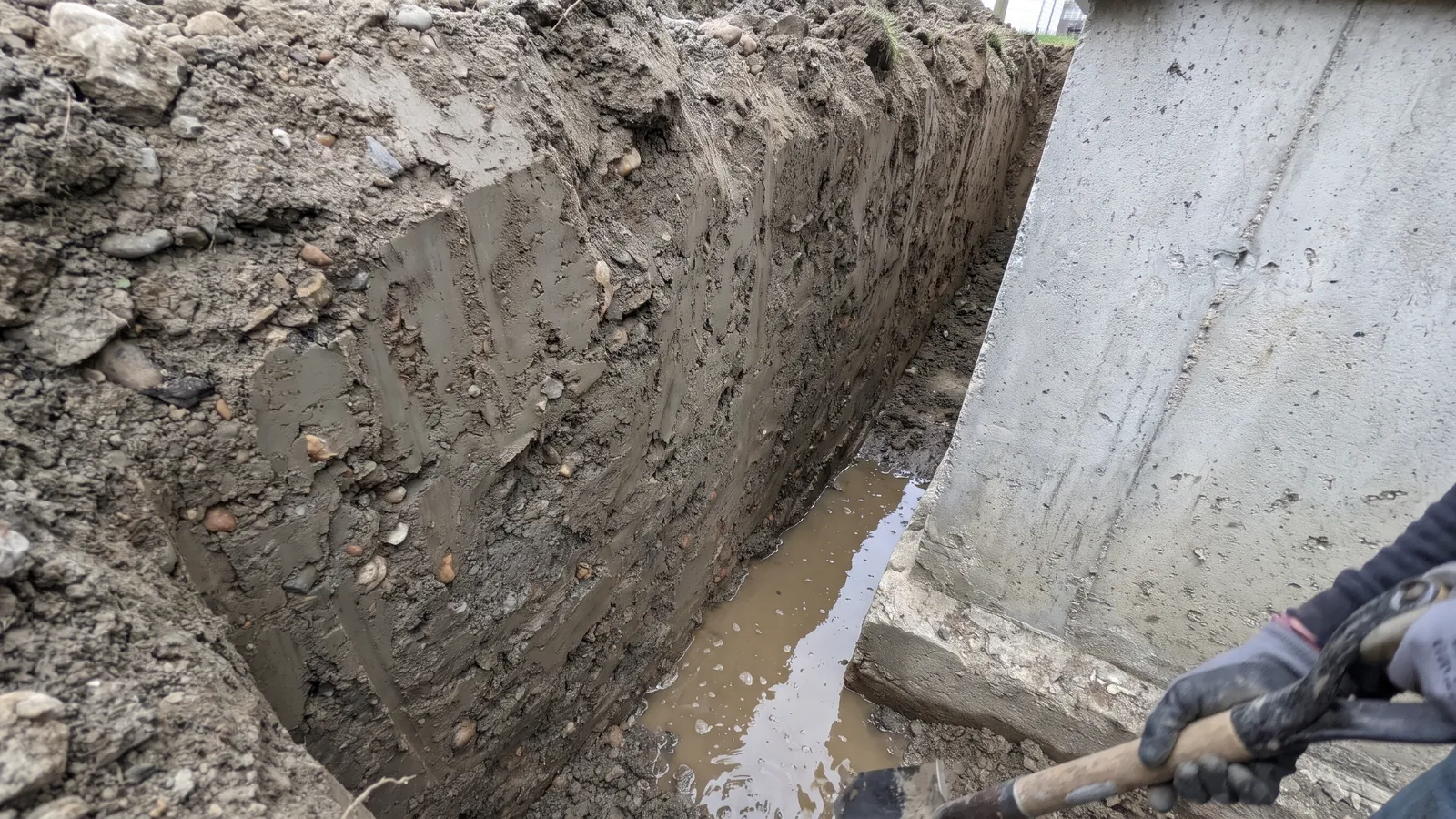
The soil comes off the wall down to the footing, the wall is coated and boarded, and a new footer drain goes in before backfill.
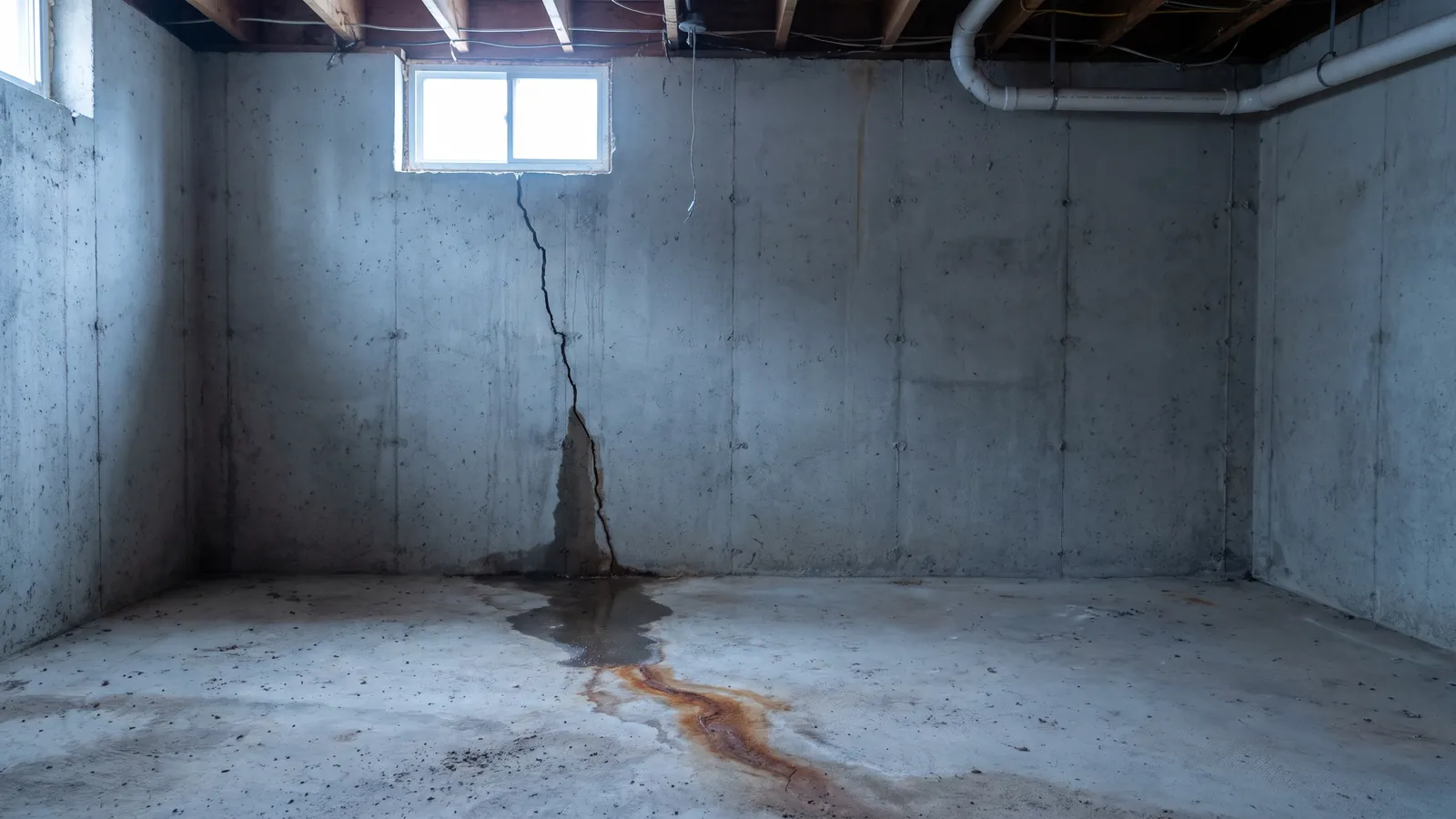
Poured walls that leak at one crack get ports and a resin fill from the inside, without digging the yard.
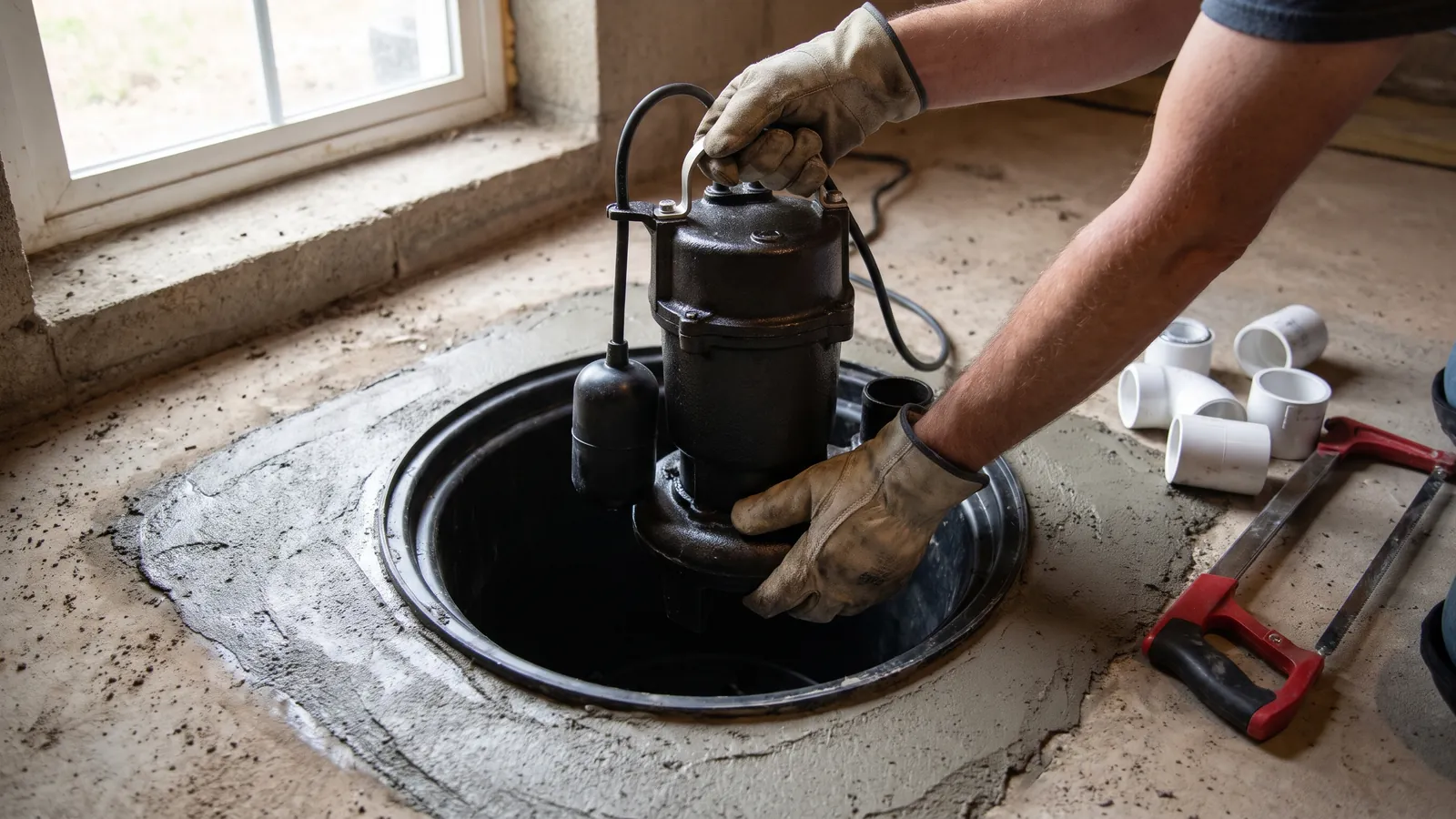
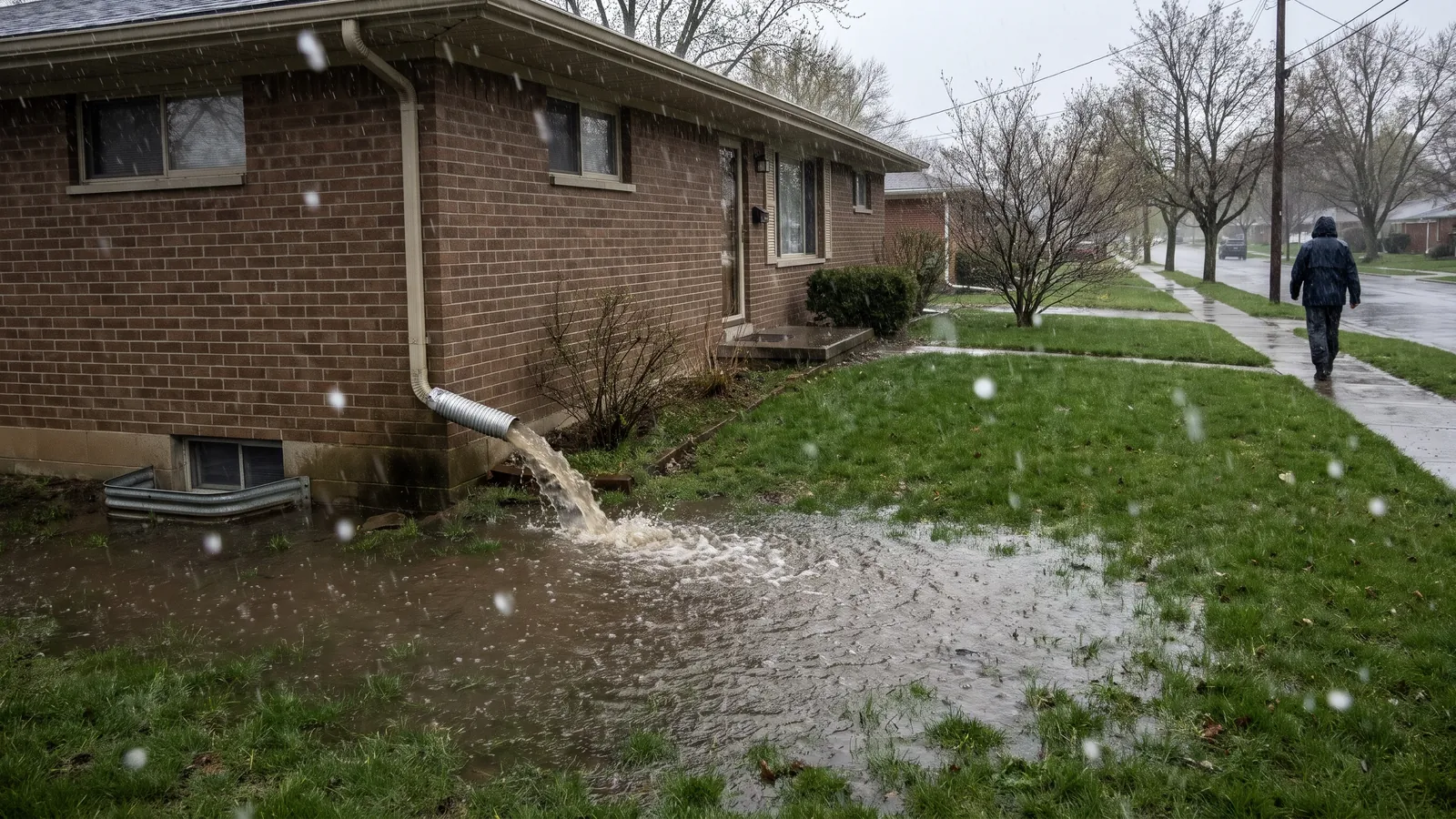
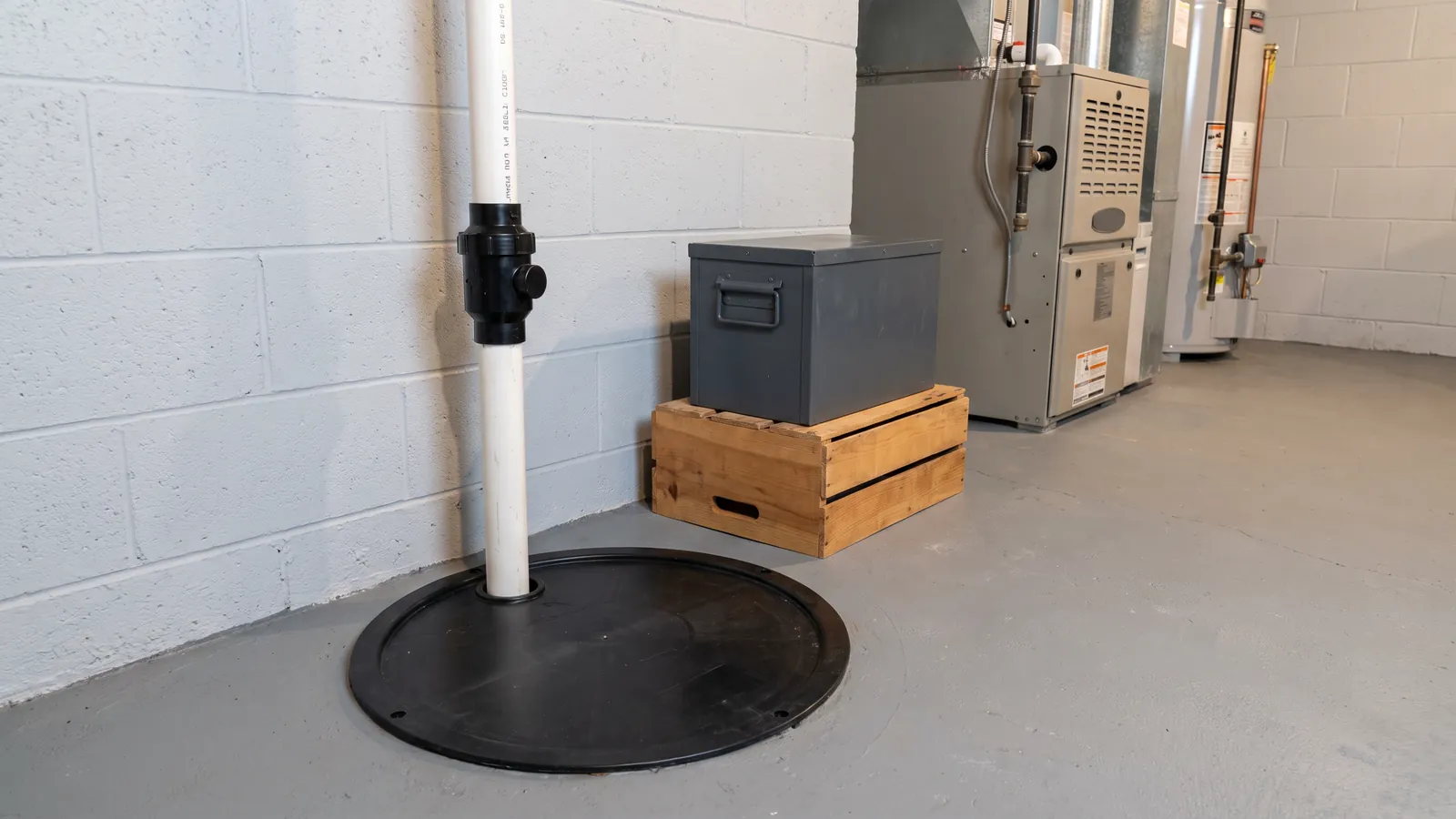
New basins, replacement pumps and battery backups, with the discharge run far enough from the house to stay out.
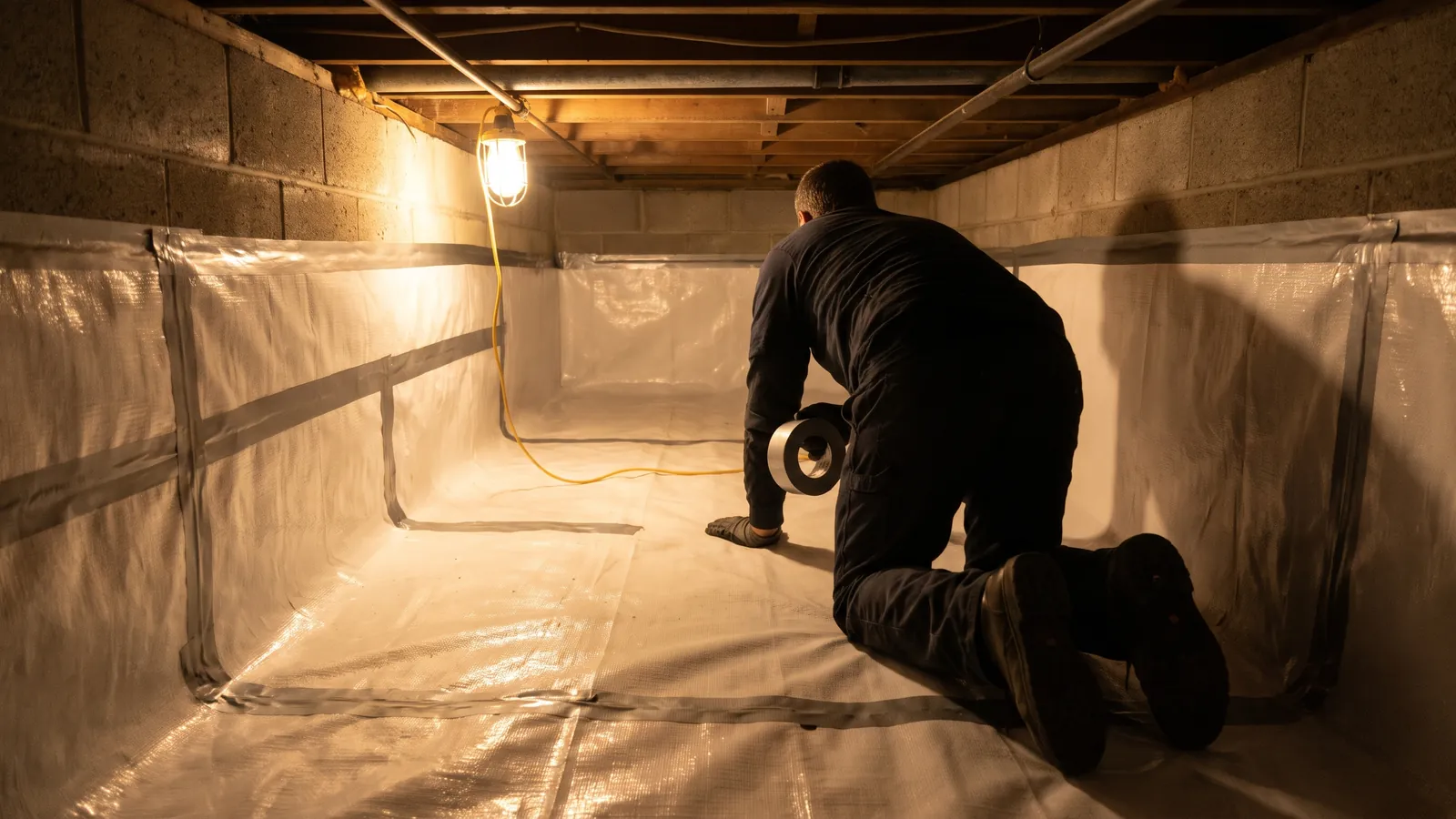
Liner on the dirt and walls, taped seams, and a dehumidifier where the space needs one.
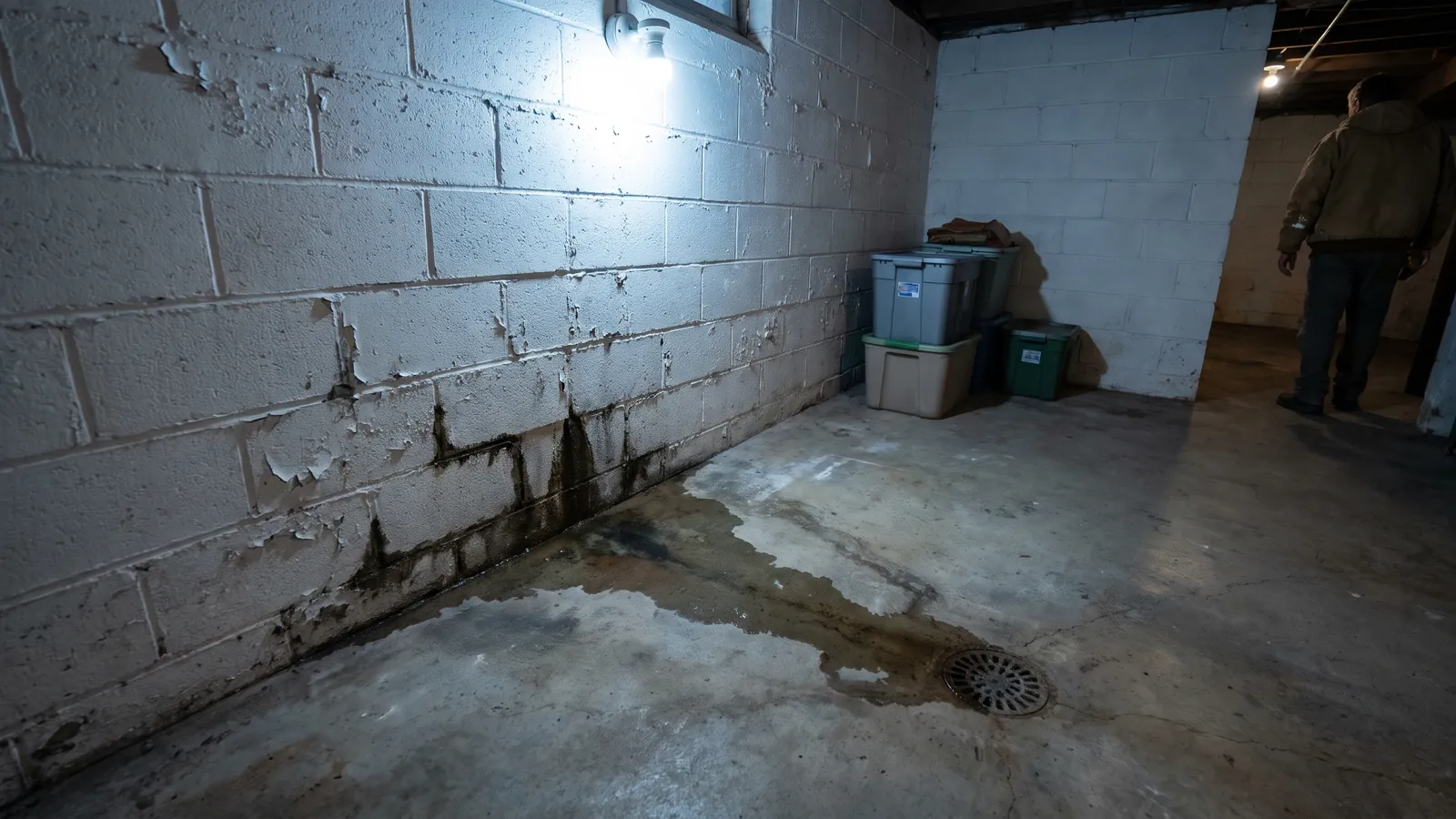
Pipe penetrations, window wells, cove joints and the one soft spot that only weeps after a long soaking rain.
Sand lets rain soak down and away. The glacial clay under most of Franklin County does the opposite: it fills up, swells and sits there, pressing water against the foundation for days after the storm has passed. When it dries it shrinks back and leaves gaps along the wall that the next rain fills first.
That cycle is why a basement that stayed dry for years can start leaking after one wet spring. It is also why a coat of sealer paint on the inside rarely lasts: the water is pushing from the soil side, and paint has nothing to hold it back with.
Older houses add their own weak points. Pre-war block and fieldstone foundations have hundreds of mortar joints, and many older neighborhoods drain into combined sewers that can back up during heavy rain. We sort out which of these is behind your water before recommending anything.
Inspections run across Franklin County and into Delaware, Fairfield and Licking counties. Each town page covers what we see in that town's housing and soil.
Tell us where the water shows up and after what kind of rain. We set the inspection the same day you reach us.
Walls, floor joint, sump, window wells, downspouts and the slope of the yard. You see what we see.
One recommended fix, the alternatives if there are honest ones, and every line priced. No pressure to sign that day.
Permit pulled if needed, the job done, debris hauled out, and the system shown to you before the crew leaves.
Typical ranges for interior drains, exterior excavation and crack injection, and what moves the number.
Read the cost guide →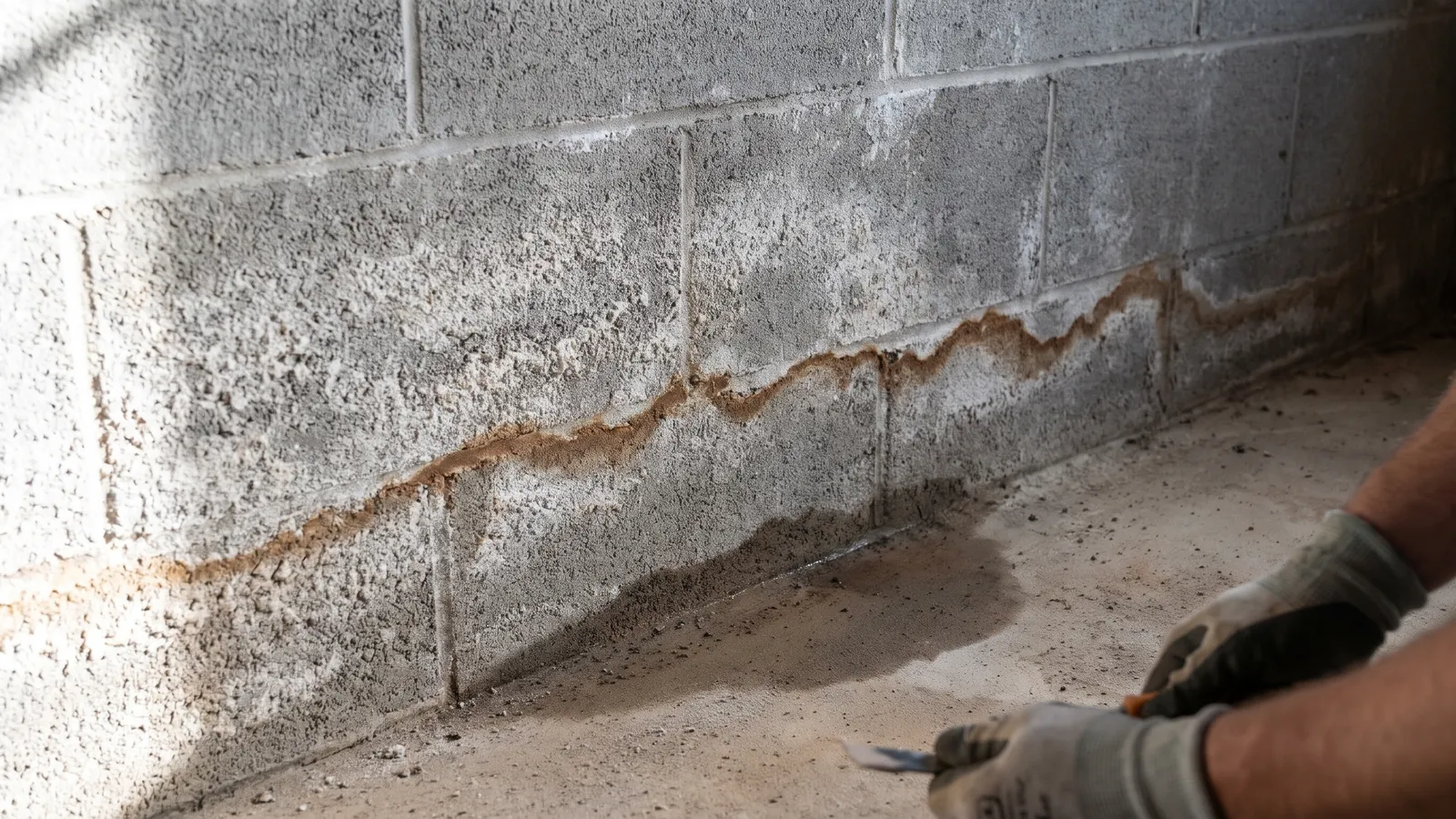
White crust, tide lines, a musty smell: what each one says about where the water comes from.
Read the guide →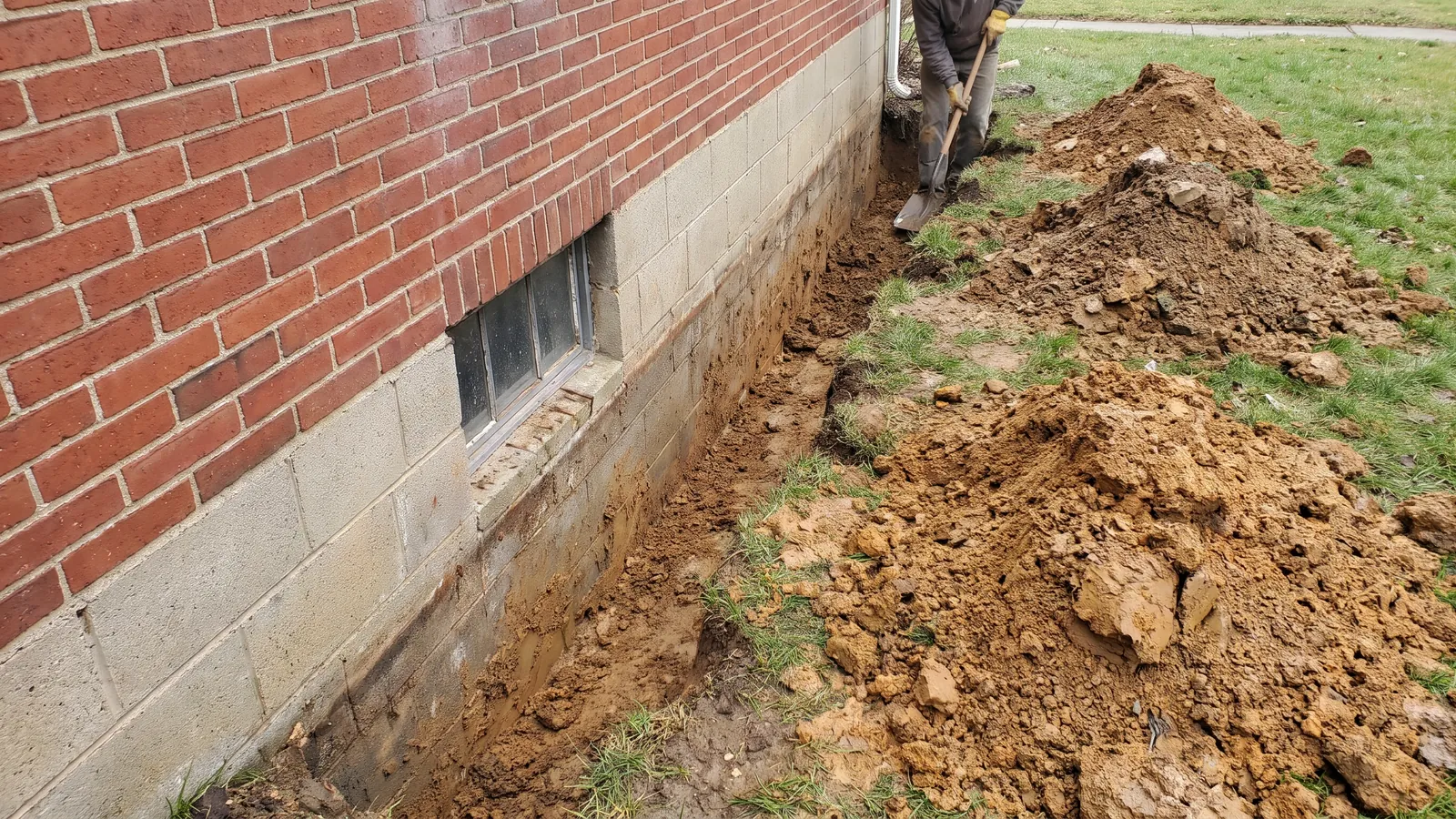
How the two approaches differ in cost, disruption and what they protect.
Compare them →More in the full FAQ.
Water in the basement?
Our phone line runs every minute of the year. Say where the water shows up and we set the inspection.
(380) 261-2333Most of the area sits on glacial till: dense clay and silt that drains slowly. After a long rain the soil against the foundation stays saturated, and that water pushes on the wall with hydrostatic pressure until it finds a crack, a mortar joint or the seam where the wall meets the floor. Add 37 to 40 inches of rain a year and 30 to 40 freeze-thaw cycles, and the weak points get worse every season.
Neither wins every time. Exterior work stops water at the outside face of the wall, so it suits walls that are failing or a basement you plan to finish to a high standard; it costs more because of the digging. Interior drainage lets the water reach the wall and carries it to a sump before it reaches the floor, at a lower price and with no torn-up landscaping. We tell you which one fits after we look. See interior vs exterior.
Exterior excavation and foundation work usually needs a permit from the City of Columbus Department of Building and Zoning Services or from the Franklin County building department, depending on the address. Interior drainage often does not, but the office makes that call, not us. Where a permit is required, we pull it. See permits in Columbus.
Ohio has no state license for waterproofing, so no waterproofing company here holds one. The work on this site is done by registered and insured crews. Plumbing, electrical and HVAC are licensed trades in Ohio, so any sump work that ties into a sewer line goes to a licensed plumber.
The inspection and the written estimate are free. We walk the basement, check the outside grade, downspouts and window wells, and leave a price on paper. Nothing is cut or drilled until you sign.
Yes. Our phone line runs every minute of the year. Call (380) 261-2333, say where the water is coming in, and the inspection gets set from there. A basement with water rising on the floor goes to the top of the list.
Call or send the form. We set an inspection, show you where the water is getting in, and put the fix and its price on paper before anyone cuts concrete.