Signs of basement water problems
A basement usually warns you well before it floods. Here is what to look for, what it means and how urgent it is.
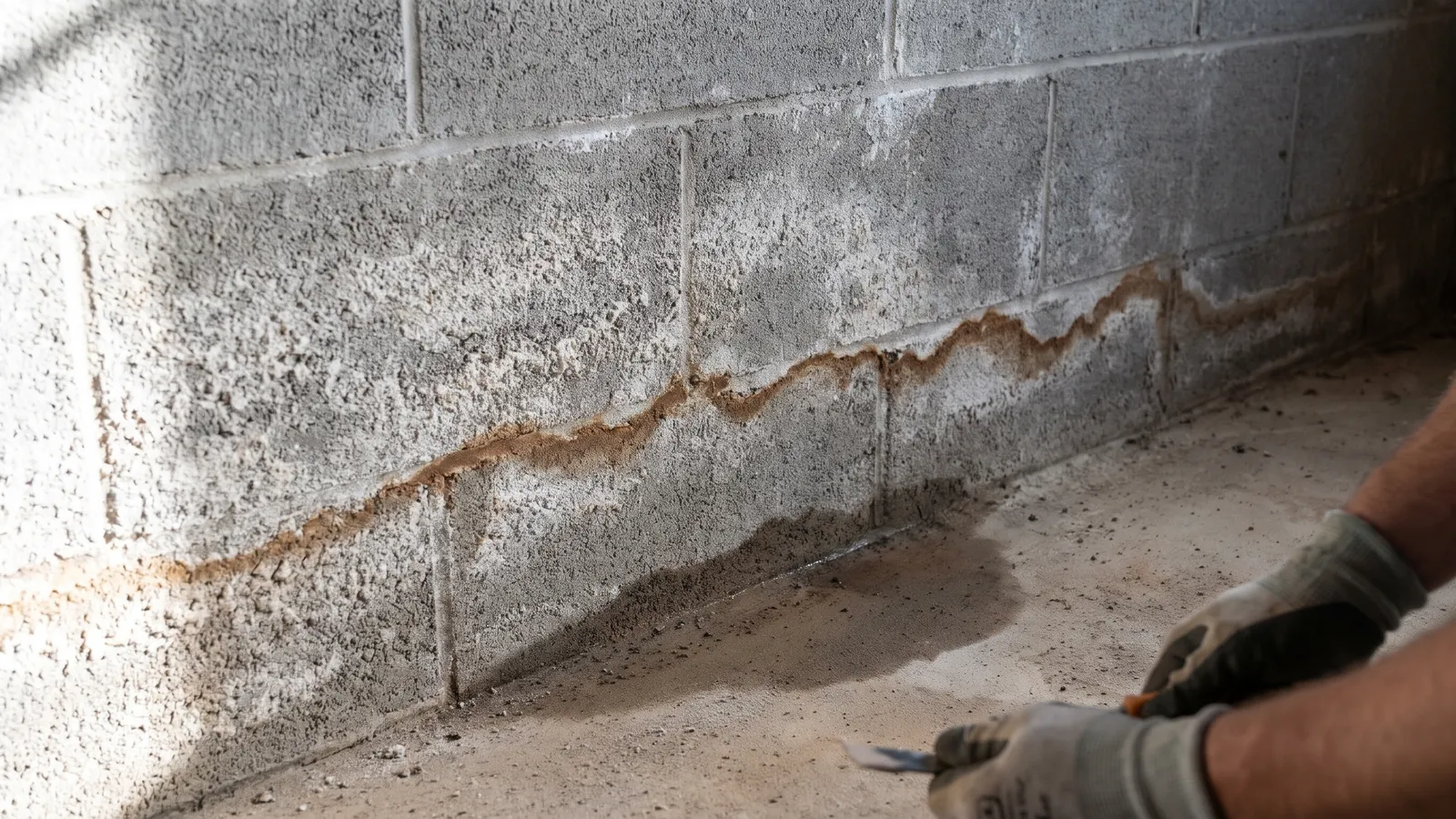
Signs and what they mean
| You see | It means | Urgency |
|---|---|---|
| White powdery crust on walls | Water passing through masonry and evaporating | Watch, then inspect |
| Wavy tide-line stain | Water stood on the floor and dried | Inspect soon |
| Dark band along the floor joint | Water entering at the cove joint | Inspect soon |
| Bubbling, peeling paint | Moisture pushing out of the wall | Inspect |
| Wet crack after rain | A water path through the wall | Inspect soon |
| Musty smell, mildew on stored items | High humidity, possibly a leak | Inspect |
| Horizontal crack or bowing wall | Soil pressure on the wall | Get it assessed promptly |
| Standing water | Active entry or a pump failure | Call now |
Check after the right kind of rain
In Columbus, many basements stay dry through quick summer storms and leak only after a long, soaking rain or snowmelt, when the clay around the house is saturated. Walk the basement a day after one of those. Bring a flashlight and look low, along the base of every wall and behind stored boxes.
Simple tests
- Foil test: tape a square of aluminum foil to the wall for two days. Moisture on the room side means condensation from humid air; moisture on the wall side means water coming through.
- Downspout walk: in the rain, watch where each downspout empties. Anything within a few feet of the wall is suspect.
- Window wells: look for standing water or leaves after storms.
When to call
Call if you see standing water, a wet crack, a bowing wall, or signs that come back after you clean them up. The inspection is free, and knowing the cause early keeps the fix small.
Questions
Is a little efflorescence normal?
It is common, but it always means water is moving through the wall. A light, stable amount may only need watching; heavy or growing deposits deserve a look.
Should I worry about hairline cracks?
Most vertical hairline cracks in poured walls are shrinkage cracks. If they stay dry, watch them. If they get wet, they can be injected.
More reading: all costs and guides · FAQ